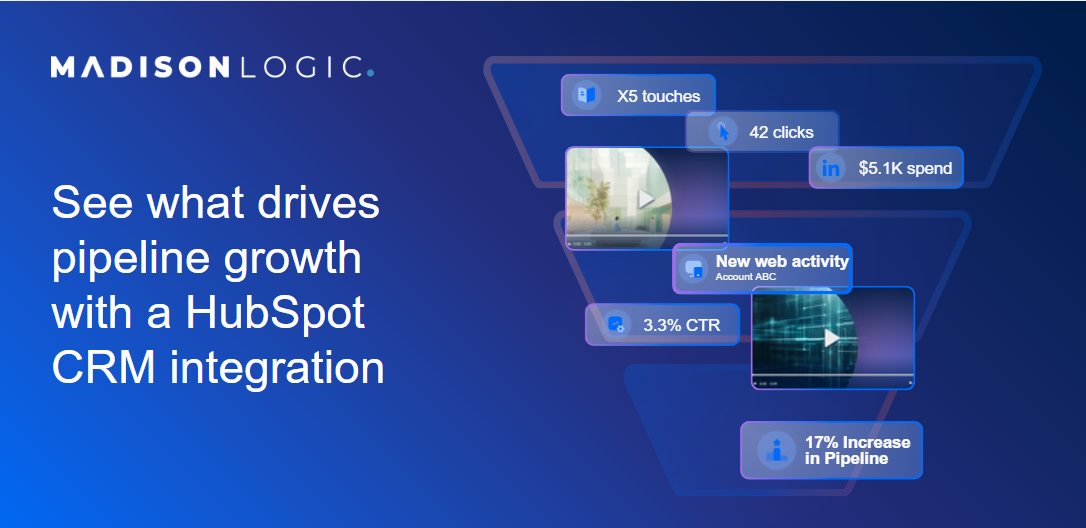


HubSpot can tell you when pipeline is created. What it cannot always show is everything that helped move an account there.
For B2B demand generation teams, that’s more than a reporting gap—it’s a decision-making gap.
Marketing leaders invest across multiple channels to build awareness, engage buying groups, and influence pipeline. But if the engagement happening outside the CRM isn’t connected to opportunity creation, it’s difficult to understand which investments are creating momentum, which accounts are progressing, and where to shift budget for greater impact.
The result is a measurement model that’s largely retrospective. Teams can often explain what influenced pipeline after opportunities are created, but they have far less visibility into how account interest developed—or which signals indicated momentum while campaigns were still running.
For marketers focused on driving revenue from high-value accounts, understanding pipeline progression has become just as important as measuring attribution.
What HubSpot Measures Well
HubSpot has become a popular CRM and marketing platform because it helps teams centralize and measure marketing performance.
With HubSpot, marketers can:
- Track campaign engagement by seeing how contacts interact with emails, landing pages, forms, and other campaign assets over time. This helps teams understand which programs are generating attention once a known contact is in the system.
- Monitor lifecycle stage movement to see how contacts move from awareness to consideration, opportunity, and beyond, and how that progression correlates with the channel or campaign that originally brought the contact in. This helps teams understand which sources are associated with contacts who advance further, though not which specific activity drove each individual stage change.
- Measure attribution across channels so marketers can evaluate how different touchpoints contribute to conversions and revenue. This helps teams compare the influence of paid LinkedIn ads, owned channels, and earned programs (through a custom-built report) rather than relying on a single source of truth.
- Connect marketing efforts to revenue outcomes by tying campaign activity back to deals, pipeline, and closed-won business. This gives leadership teams a clearer view of how marketing contributes to growth and business performance.
- Build reporting dashboards for leadership teams that summarize performance in a way that is easy to review and act on. These dashboards help translate complex marketing activity into business-friendly reporting that supports decision-making.
These capabilities provide valuable visibility into how marketing contributes to business growth. However, as organizations mature their account-based marketing (ABM) programs, measurement requirements often expand beyond campaign and contact-level reporting.
Why Attribution Leaves Gaps in ABM Measurement
Traditional attribution models are designed to answer, “Which marketing touchpoints influenced revenue?” While valuable, this perspective can leave important gaps for ABM teams.
Attribution helps marketers understand which campaigns, channels, and programs contributed to pipeline and revenue outcomes. However, attribution was never designed to explain the full complexity of modern B2B buying.
Most B2B purchases involve multiple stakeholders, extended evaluation periods, and dozens of interactions spread across channels and campaigns. A single opportunity may be influenced by practitioners conducting research, managers evaluating solutions, executives approving budgets, and procurement teams reviewing vendors—all engaging at different points in the journey.
As a result, attribution often provides a useful explanation of what contributed to a deal after it was created, but it does not always reveal how that opportunity developed in the first place.
For marketing and sales teams, knowing which campaign influenced revenue is valuable. Understanding whether target accounts are building momentum toward a buying decision is often even more important.
To evaluate ABM performance more effectively, marketers need visibility into questions that attribution alone cannot answer:
- Which campaigns are driving progression?
- Are target accounts becoming more engaged over time?
- Is engagement expanding across the buying group?
- Which accounts are demonstrating signals of growing purchase interest?
- Are engaged accounts progressing toward pipeline creation?
These questions shift the focus from assigning credit for revenue to understanding how revenue opportunities take shape.
What Pipeline Progression Visibility Reveals
If attribution explains outcomes, pipeline progression visibility helps explain momentum. Rather than focusing solely on which campaigns influenced a closed deal, pipeline progression visibility helps marketers understand whether target accounts are moving closer to becoming customers.
For ABM teams, that visibility often comes from three interconnected signals.
Account Engagement
The first signal is whether target accounts are actively engaging with marketing efforts.
An increase in account engagement can indicate growing awareness and interest, but engagement alone does not necessarily predict revenue. Marketers need to understand whether engagement is sustained, whether it is increasing over time, and whether it reflects meaningful interest rather than isolated activity.
Buying Group Participation
The second signal is the depth of buying group involvement.
B2B purchases rarely depend on a single stakeholder. As engagement spreads across functions, teams, and levels of seniority, marketers gain stronger evidence that an account is actively evaluating solutions rather than casually consuming content.
Buying group expansion often provides an early indication that conversations are progressing beyond initial research and toward more serious consideration.
Funnel Progression
The third signal is whether engagement is translating into measurable progress.
Accounts that consistently engage but never advance may indicate interest without intent. Accounts that demonstrate increasing engagement, expanding stakeholder participation, and movement toward opportunity creation often represent stronger revenue potential.
Together, these signals create a more complete view of pipeline health than attribution reporting alone can provide.
Instead of measuring what happened after a deal was influenced, marketers gain visibility into how opportunities develop and accelerate throughout the buyer journey. And with that visibility, marketers can track account behaviors that indicate future pipeline growth. They’ll understand which accounts are showing increased engagement and becoming more active, and which signals suggest an opportunity is gaining momentum before it reaches the later stages of the funnel. Without that layer of insight, it becomes difficult to distinguish between accounts that are simply interacting with marketing and those that are genuinely moving closer to revenue.
How HubSpot and Madison Logic Close the Measurement Gap
Attribution will always be able to tell you that marketing contributed. What it can’t tell you on its own is how that opportunity came together:
- which channels reached the buying group
- how engagement built over time
- what moved the account from quiet to in motion
- which seniorities you need to influence to progress deals
- how you can solve pipeline friction
That’s the gap between knowing marketing worked and knowing what to do next. The HubSpot Smart CRM integration closes it by connecting the engagement happening across content syndication, programmatic advertising, and paid social directly to pipeline stage and opportunity progression inside HubSpot. Turning a retrospective attribution report into a real time view of how pipeline is actually built.
For demand gen teams under pressure to defend every dollar, that’s the difference between explaining last quarter’s results and shaping this quarter’s outcome.
Contact us today to learn more about Madison Logic and the HubSpot Smart CRM integration.
Ready to run ABM the right way?
See how Madison Logic helps enterprise marketers convert their best accounts faster.

